
In Texas, a car you owned before marriage is generally separate property, and an inheritance received by one spouse is generally separate property. Texas courts cannot divest a spouse of separate property in a divorce, but you may need to prove it is separate with clear and convincing evidence. Tex. Fam. Code §§ 3.001, 3.003; Eggemeyer v. Eggemeyer, 554 S.W.2d 137 (Tex. 1977).
In Texas, getting married does not automatically change separate property into community property. Disputes often come from proving what is separate, tracing accounts when funds are mixed, and reimbursement claims when one marital estate benefits another. Tex. Fam. Code §§ 3.001, 3.003, 3.402.
Imagine separate property as an untouched island and marriage as the bridge connecting it to the mainland— the marital territory.
In Texas, separate property usually stays separate, but problems can come up when money is commingled or when community funds are used to improve or pay debts on separate property. Those situations can raise tracing questions or a claim for reimbursement, even if the asset itself remains separate. Tex. Fam. Code §§ 3.001, 3.003, 3.402.
Hang tight with us, and we’ll decode these complexities. Using real-life examples, we’re going to offer practical tips to safeguard your ‘island’. So let’s dive in!
Understanding Separate and Marital Property
When two people tie the knot, they’re not just joining lives; they’re merging assets too.
In Texas, separate property generally includes what you owned or claimed before marriage, what you receive during marriage as a gift or inheritance, and certain personal injury recoveries (except lost earning capacity). Tex. Fam. Code § 3.001.
Community property in Texas generally means property acquired by either spouse during marriage that is not separate property. Many people call community property “marital property” in everyday conversation. Tex. Fam. Code § 3.002.
The Shift from Separate to Marital Property: How Does it Happen?
A key question in many divorces is whether separate properties have morphed into marital ones. What brought about the transformation?

In Texas, using separate money for family expenses or improvements does not automatically make that money community property, but it can make the separate share harder to trace later. When community funds are used to benefit separate property (or separate funds benefit the community estate), a spouse may raise a reimbursement claim in divorce. Tex. Fam. Code § 3.402.
What About Debt? Is That Shared Too?
In Texas, you are not automatically personally liable for your spouse’s debts just because you’re married. Personal liability usually depends on who signed for the debt, whether a spouse acted as the other’s agent, or whether the debt was for necessaries. Debts incurred during marriage can still affect the community estate and how a court divides property in divorce. Tex. Fam. Code §§ 3.201, 3.202, Tex. Fam. Code § 7.001.
Remember: Rules related to these concepts can vary depending on where you live and your circumstances.

Legal Frameworks Governing Property Division
In the U.S., there are two main legal systems for property division: community property and equitable distribution.
Community Property States
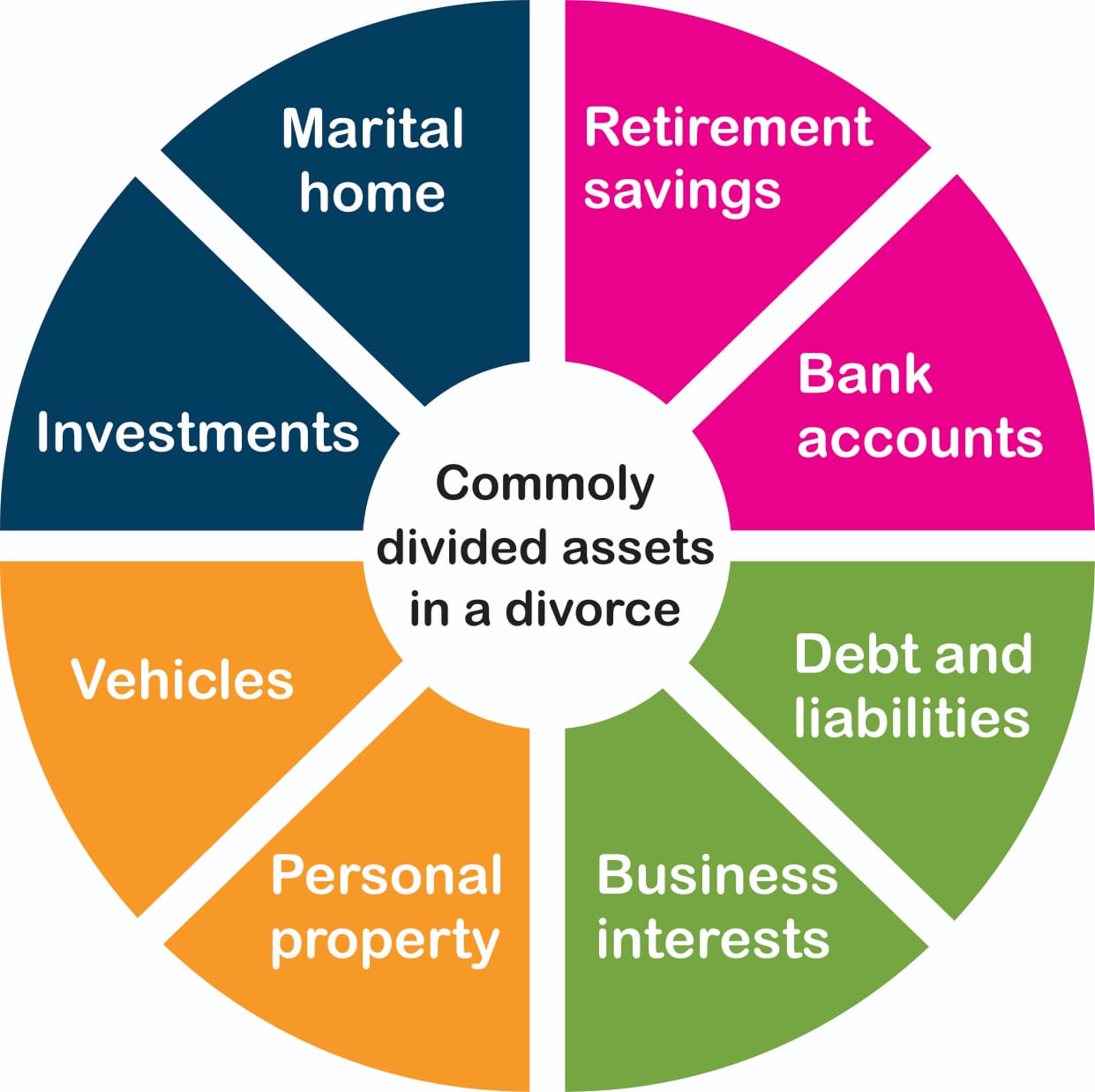
In community property states like Texas, most property acquired during marriage is presumed to be community property. In a Texas divorce, the judge divides the community estate in a manner the court considers “just and right,” which may or may not be a 50/50 split. Tex. Fam. Code §§ 3.003, 7.001.
Equitable Distribution States
The rest of the states use an “equitable distribution” system to divide marital assets fairly, but not necessarily equally. Factors like marriage duration or the financial situation of each divorcing spouse can affect who gets what.
Nolo’s divorce FAQ on Divorce & Property Division offers more detail about this process. This basic framework helps us understand how separate properties may morph into marital ones within a union’s lifespan.

Separate to Marital Property – Conversion Mechanism
When you say “I do,” it’s not just hearts merging, but assets too. In Texas, marriage itself does not automatically change separate property into community property, but it can create questions about what is separate and what is community.
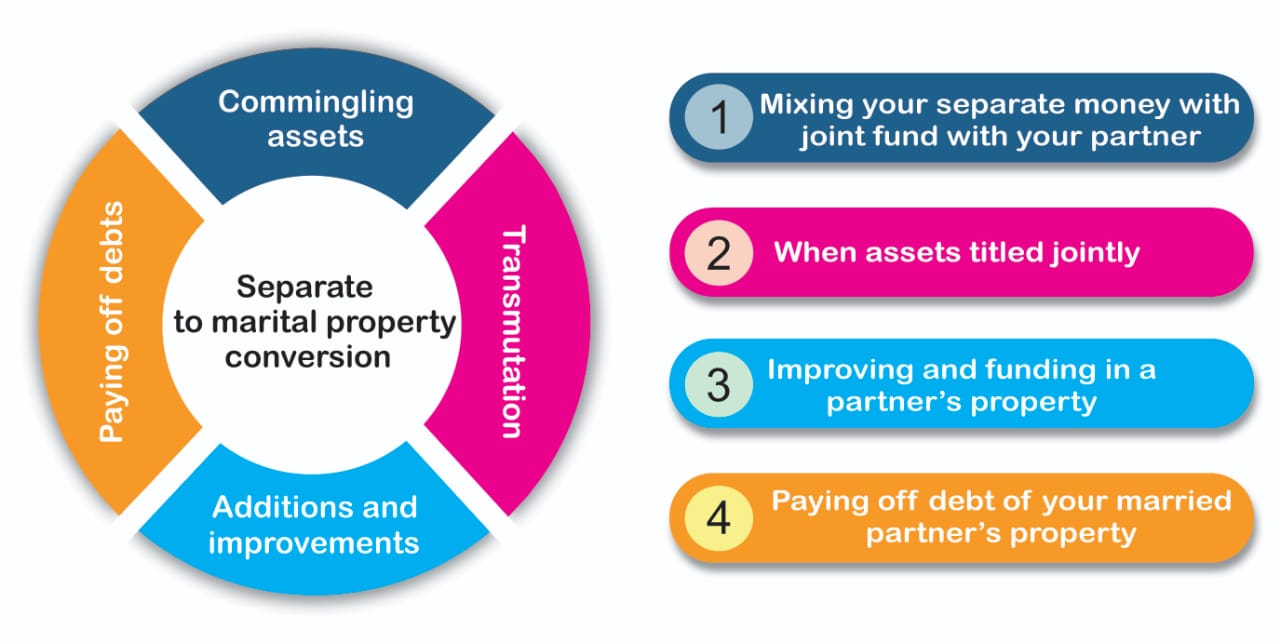
Co-mingling Assets
Commingling happens when separate money and community money are mixed in the same account. In Texas, mixing funds does not automatically change separate property into community property, but it can make it harder to prove what is separate because property in your possession at divorce is presumed to be community property unless proven otherwise. Tex. Fam. Code §§ 3.001, 3.003.
Transmutation
You may hear the word “transmutation” in other states, but Texas law focuses on the character of the property and the documents involved. Putting both spouses on a deed can raise questions about whether an ownership interest was gifted, and spouses can also sign a written agreement that converts separate property to community property. Tex. Fam. Code § 4.203.
Additions and Improvements
In Texas, improvements to one spouse’s separate property do not automatically turn the asset into community property. But if community funds or labor were used to improve a separate asset (or separate funds improved a community asset), the court can consider a claim for reimbursement when dividing property. Tex. Fam. Code § 3.402.
Paying Off Debts
Paying off debts on separate properties using marital money also muddies the waters between ‘mine’ and ‘ours’. Kind of like doing dishes after a big party- whose mess was it really?
Remember: The rules aren’t universal; state laws differ so get legal advice if needed.
The Role of Prenuptial and Postnuptial Agreements
Prenups, as we often call them, are not just for the rich and famous. They can be a smart move for any couple.
A prenup, or prenuptial agreement, is a legal contract entered into before marriage. It sets out who owns what at the start of a relationship.
This means it’s easier to figure out what stays separate property if you ever split up. You get to make that decision together while things are good between you.
Postnups – Not Just Afterthoughts
A postnup is a marital property agreement signed after you’re married. In Texas, spouses can also sign agreements that partition community property into separate property or that convert separate property into community property, depending on what the agreement says. Tex. Fam. Code §§ 4.102, 4.203.

Postnups could help protect separate assets from becoming marital property later on down the line too.
Making Things Clear From the Start
If either type of agreement is drafted properly by an experienced attorney, they can clearly define what counts as separate versus marital property.
You’ll both know where you stand right from the outset. This is because these agreements leave little room for confusion when dividing assets during divorce proceedings.
Case Studies on Property Conversion
Let’s look at a few real-life scenarios to better understand how separate property can turn into marital property.
The Case of the Co-mingled Funds
Suppose John had $50,000 in savings before marrying. After marriage, he deposited that money into a joint account with his wife Jane. In Texas, that deposit does not automatically change the $50,000 into community property, but John may need records that let him trace the separate funds. Tex. Fam. Code §§ 3.001, 3.003.
The Story of Home Improvements
Linda owned a house prior to her marriage to Bob. If community funds were used for home improvements, the house does not automatically become community property in Texas, but the community estate may have a reimbursement claim for the money spent. Tex. Fam. Code §§ 3.001, 3.402.
A Tale of Business Growth
Rick started a business before marrying Sue. In Texas, the business can remain Rick’s separate property, but a spouse’s efforts or community resources used to build it can support a reimbursement claim in a divorce. Tex. Fam. Code § 3.402.

Remember that each case is unique and laws vary by state so always seek legal advice when you need help understanding your situation, including guidance on a marital settlement agreement if needed.
Protecting Separate Property from Becoming Marital Property
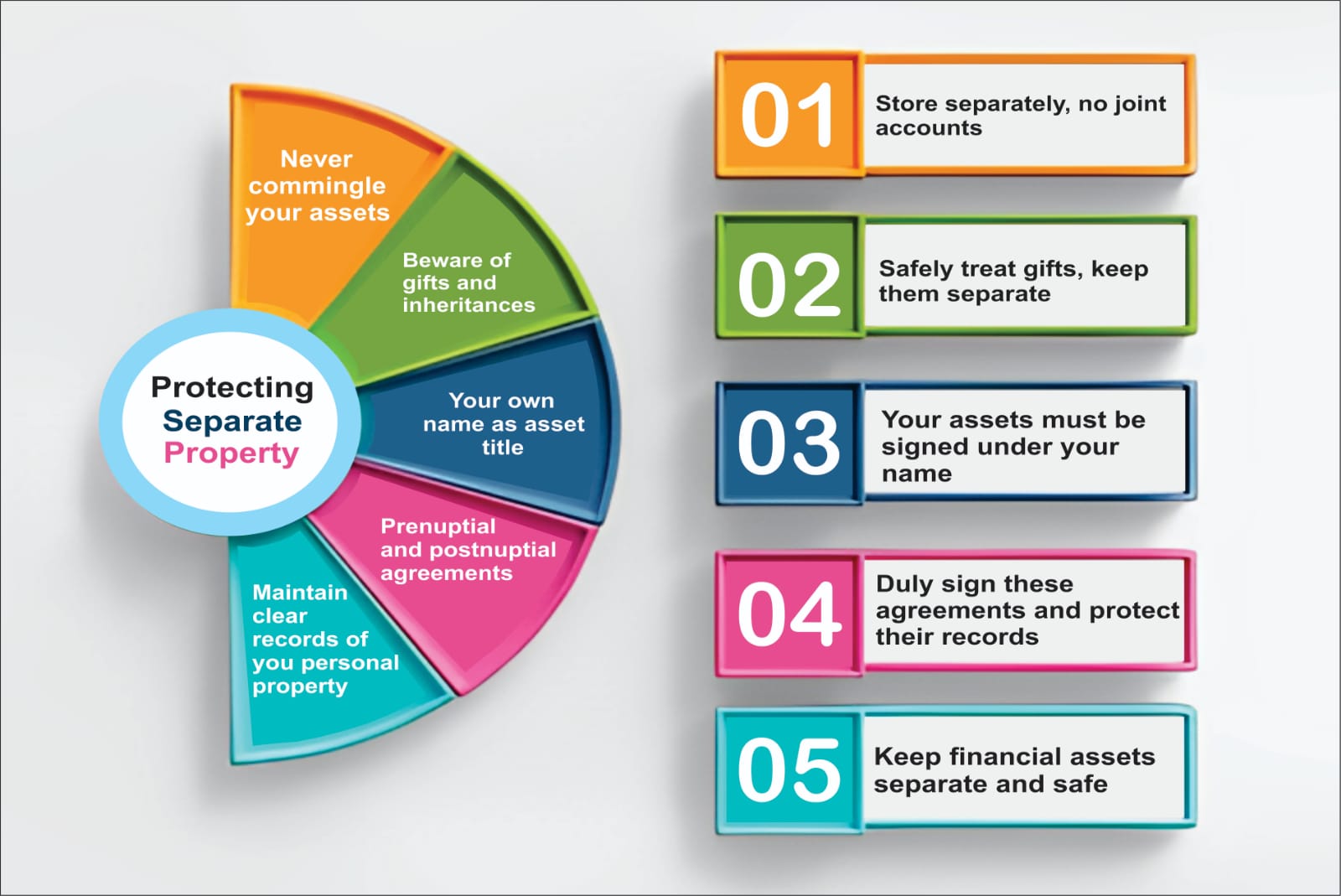
Do you know what the key is to safeguarding your separate property? Be sure to keep it truly separate.
If you mix or ‘commingle’ your non marital property with marital property, things get messy. It’s like pouring milk into coffee; it’s hard to tell where one ends and the other begins.
So make sure you don’t blend, no matter what.
Maintain Clear Records
A paper trail is important for protecting your personal belongings. This isn’t a mystery novel, but clear documentation to prove ownership.
Prenuptial and Postnuptial Agreements
Ever heard of ‘pre-nups’? They’re not just for celebrities. Prenuptial (before marriage) and postnuptial (after marriage) agreements let couples decide how they’d split their assets if needed.
Title Matters
Titles and deeds can matter, but in Texas the character of property often depends on when and how it was acquired. Changing the title to add a spouse can create disputes about whether an ownership interest was gifted or whether the property is community or separate. Tex. Fam. Code §§ 3.001, 3.002, 3.003.
Beware of Gifts and Inheritances
In Texas, gifts and inheritances received by one spouse are generally separate property. If you mix gifted or inherited money into accounts with community funds, it can become harder to prove what is separate, and the court may treat the property in your possession as community unless you can trace it. Tex. Fam. Code §§ 3.001, 3.003.
Tips to Protect Gifts & Inheritance:
- Store separately: Don’t lump Aunt Mabel’s antique necklace with family jewels.
- No joint accounts: That cash gift from Dad doesn’t belong in the shared savings account.
Impact of Separate to Marital Property Conversion on Divorce Proceedings
The switch from separate to marital property can make waves in divorce proceedings. It’s like switching lanes during rush hour traffic – it can lead to unexpected jams and collisions.
In divorce, this ‘traffic jam’ occurs when dividing assets. This process gets more complicated if separate property becomes marital property.

Community Property vs Equitable Distribution
Properties are split according to state’s laws. They are either community property laws or equitable distribution rules.
Cases When Separate Property Becomes Marital Property
Say you bought a house before marriage (separate), but later used shared funds for upgrades (marital). That house could now be seen as mixed, leading to potential disputes during asset division.
Prenuptial and Postnuptial Agreements’ Role
To prevent potential disputes, couples may opt for prenuptial and postnuptial agreements that specify which assets remain separate versus those that become marital property. These documents clarify what remains separate versus what becomes marital property.

Unsure if your property is at risk? Speak to a Texas family law attorney from Warren & Migliaccio for clear guidance and legal advice. Call today to schedule your consultation!
FAQs in Relation to How Does Separate Property Become Marital Property
When can separate property become community property in Texas?
In Texas, separate property generally stays separate. It may be treated as community property in court if you cannot prove it is separate, and spouses can also sign a written conversion agreement that changes how specific property is classified. Tex. Fam. Code §§ 3.003, 4.203.
What is not a marital asset?
A non marital asset is typically something you owned before marriage or acquired as an individual gift or inheritance.
Can married people hold separate property in a community property state?
Absolutely. Gifts, inheritances and items bought pre-marriage usually remain your personal belongings even if you’re hitched in these states.
What is an example of a property transmutation?
In Texas, adding your spouse’s name to a deed can change who owns the property and can create disputes about whether an ownership interest was gifted. It does not automatically make a premarital house community property, and a true conversion of separate property to community property requires a written conversion agreement that meets Texas law. Tex. Fam. Code §§ 3.001, 4.203.
Schedule A Consultation With Our Firm
Understanding how separate property becomes marital property is a challenging part of the divorce process. But you’ve nailed it with us.
You now know the difference between separate and marital properties. You’ve also learned about community property states and equitable distribution laws.
How does separate property become marital? Co-mingling assets or improving property are just two ways this can happen. But remember: prenuptial and postnuptial agreements can play a significant role too!
We have discussed real-life examples to make things clear, right?
The biggest takeaway is that there are practical strategies to protect your ‘island’ throughout divorce proceedings. Remember to utilize these tactics if needed.
Finally, don’t forget – this transformation impacts divorce proceedings as well! Always be aware of your rights when working through these issues.
If you need help understanding how separate property becomes marital property in Texas, we’re here to assist you. Working through these legal questions can be challenging, and our team is ready to offer guidance and support. Call Warren & Migliaccio today at (888) 584-9614 or submit our online contact form to schedule a consultation. We’re committed to helping you protect your assets and understand your rights. Don’t hesitate to call us now for the assistance you need.